

What type of massage is best for treating fibromyalgia?

About this post
Discover how massage can help relieve the pain, tension and stress caused by fibromyalgia, plus tips for choosing the right technique and preparing for treatment.
Posted by
Melissa LauTags
- Massage
- Health conditions
Share
What is fibromyalgia?
Fibromyalgia is a chronic condition characterised by constant pain, tiredness and cognitive issues, such as problems managing emotions. It can occur during any stage of life, though is most common in women between 30 and 50.
Rather than a disease or illness that can be “cured”, it is an ongoing syndrome that must be managed. While not life-threatening, it can have a huge impact on a person’s quality of life.
The catalyst for fibromyalgia remains a subject of debate, but it’s thought to be due to an imbalance of chemicals in the brain, which then impacts the way the nervous system deals with pain. It can sometimes be triggered by a specific challenging event, such as:
an injury
infection
giving birth
A stressful event like a death or breakdown of a relationship
It’s a common condition, with some estimates suggesting that around 1 in 20 people have experience of fibromyalgia. However, it can be tricky to identify because of its wide variety of potential symptoms.
What are the benefits of massage for fibromyalgia
Fibromyalgia can have have an impact on your entire body, causing ongoing problems in the muscles and joints, which is why sufferers choose to incorporate massage as a natural pain management technique. A massage can relax your muscles and loosen your joints, so can be very effective in alleviating the symptoms associated with fibromyalgia.
Other helpful benefits of massage may include:
The best massage for fibromyalgia
Finding the right massage for fibromyalgia is important, and you must choose a technique that is sensitive to your particular symptoms. A few that that have been found to be effective include:
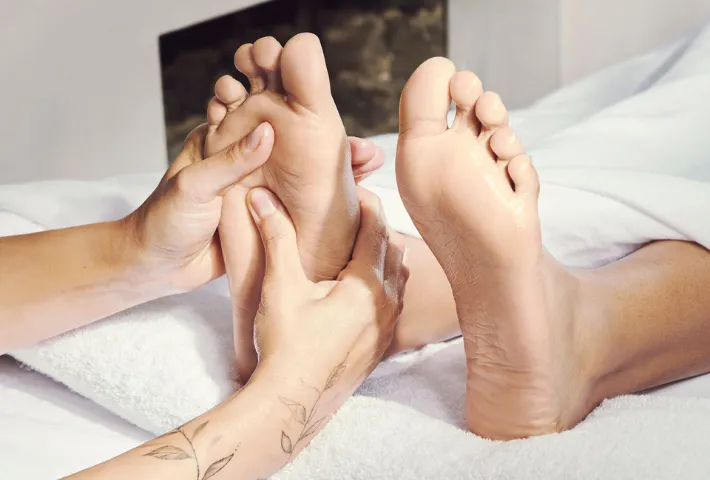
Reflexology
By stimulating points on the feet and hands, the whole body can be relaxed. Reflexology applies short bursts of light pressure, and you can always ask for less if it’s causing pain or discomfort.
Swedish massage
Using long strokes, kneading and variable pressure, Urban classic massage, our take on Swedish massage, can be used over the entire body, concentrating in areas of particular tension.
Cranial-sacral therapy
By applying pressure to key areas of the skull and around the lower spine, the flow of spinal fluid can be investigated, improving your overall muscle function.
Preparing for your massage
If you do decide to go with massage for pain relief, it’s key to talk with your doctor first, to agree on the best course of treatment for your particular symptoms.
It’s also recommended that you:
Drink plenty of water before and after which helps to drain released toxins from the body
Discuss the details of the treatment with your therapist before they begin, making sure they’re aware of any particularly sensitive areas. Continue to communicate throughout the massage if anything changes, or if you’re ever in too much pain.
Rest afterwards, and don’t rush into another treatment too soon. Allow your muscles to respond to what’s been performed on them. This will help you keep on top of what your body is telling you that it needs.
Consider regular appointments. While a one-off session may certainly help, the effects of massage can be cumulative, so a routine treatment may be more effective in helping you to manage your long-term chronic pain.
Related articles
An exploration of why cleaning genuinely lifts mood—drawing on the psychology of task feedback loops, a Florida State study on mindful dishwashing, and the sense of control it offers during stressful periods. Also draws an honest line between cleaning as therapeutic ritual and cleaning as avoidance, and makes the case for when it's healthiest to just book a pro instead.
Read more
A look at how a cluttered home office quietly undermines focus and cognitive performance—drawing on Princeton attention research and the cortisol-clutter link—for anyone working from home. Reframes cleaning your workspace as performance maintenance rather than housekeeping, with practical daily, monthly and biannual habits.
Read more
A practical, room-by-room breakdown of realistic cleaning frequencies—kitchen, bathroom, bedroom, living room and home office—based on how quickly each space actually gets dirty. Replaces vague "clean when it needs it" advice with a concrete daily/weekly/monthly schedule, plus the honest case for consistency over ambition.
Read more
A seasonal case for cleaning as a genuine mental reset, not just tidying. Covers why transition points like end-of-summer are the natural moment to reset your space, the cortisol research linking clutter to stress, and how to treat a deep clean as a purposeful ritual rather than another chore—plus when it's worth bringing in help to make sure it actually happens.
Read more
A look at how bedroom clutter and dust quietly undermine sleep quality—from the neuroscience of visual clutter keeping your brain "on alert," to the dust and allergen buildup in bedding and carpets. Includes practical fixes, from wash temperatures to when a professional deep clean is worth the investment.
Read more
UK survey data on why cleaning causes more relationship friction than most couples expect—including the striking perception gap between partners on who does more—paired with Harvard research showing that outsourcing chores together, not dividing them differently, is the more reliable fix.
Read more